[CRK] Mohsin Khan’s IPL 2026 Breakout Performance Catches India Selectors’ Eye
[CRK]
Contents
Mohsin Khan Roars Back Into Spotlight With Five-Wicket Haul
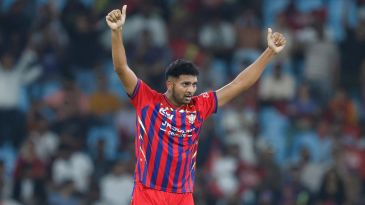
In a high-octane IPL 2026 clash that swung wildly between fortune and failure, one performance stood tall in its clarity and quality — Mohsin Khan’s five-wicket burst for the Lucknow Super Giants. With pace, precision, and a rare left-arm angle, Khan dismantled Kolkata Knight Riders’ batting lineup and reignited conversations about his place in India’s fast-bowling future.
A Spell of Discipline and Aggression
Mohsin’s day began emphatically: a wicket maiden to open his account. He didn’t slow down — picking up another scalp in his second over, then striking with his first delivery of the seventh over. By the time he wrapped up his spell, the scoreboard read 4-1-23-5. KKR were reeling at 73 for 6, thanks largely to his relentless pressure.
Former T20 World Cup winner Carlos Brathwaite, analyzing the match on ESPNcricinfo’s Time Out Show, praised Mohsin’s method: “He bashed away at the length. Not just resting the ball on a good length — he hammered the pitch.” That physicality, combined with subtle assistance from the surface, made him unplayable at times.
Smart Captaincy and a Super Over Twist
LSG captain Rishabh Pant leaned on Mohsin during the crucial middle overs, handing him the 11th over with a clear attacking mandate. As Brathwaite noted, “He came in knowing it was an attacking over — I need to get wickets and go all out.” The decision paid off with a double-wicket over, effectively stalling any chance of KKR consolidation.
Though KKR eventually won via Super Over after a late six, the narrative centered on Mohsin’s impact. His ability to switch from disciplined containment to aggressive wicket-taking mode showcased maturity beyond just raw pace.
A Long Road Back From Injury
Mohsin burst onto the IPL scene in 2022, claiming 14 wickets in nine matches at a remarkable economy of 5.96. But injuries derailed his momentum, forcing him to miss the entire 2025 season — a setback that nearly dimmed his promise.
Now, back with full fitness and fire, he’s proving he still has what it takes. As former India batting coach Sanjay Bangar emphasized, Mohsin possesses a rare skillset in Indian cricket: “He is one player with that particular skillset that we do not really have in quantity… We lack left-arm variety.”
Why India’s Selectors Should Watch Closely
Bangar didn’t mince words: “If you look at the pack of left-arm seamers, he impresses the most.” He highlighted Mohsin’s extra bounce, heavy ball, and ability to consistently hit a challenging length — traits that are invaluable in T20 cricket, especially on subcontinental pitches.
With Arshdeep Singh currently the sole specialist left-arm pacer in India’s white-ball setup, the need for depth is clear. Mohsin’s performance isn’t just a standout in IPL 2026 — it’s a timely reminder of untapped potential waiting to be harnessed.
What’s Next for Mohsin and LSG?
Lucknow Super Giants now head into a short break before facing Mumbai Indians at the Wankhede Stadium on May 4. If Mohsin maintains this form, he won’t just be a key player for LSG — he could soon find himself under the BCCI’s microscope.
For a player who’s battled setbacks and silence, this IPL might finally be the platform to speak volumes. India’s pace attack may soon have a new left-arm voice — and it’s one worth listening to.