Three lowest totals for Afghanistan in Test cricket ft. India’s Dominance: A Detailed Analysis
The Afghanistan cricket team has emerged as a formidable force in international cricket over the past decade, captivating fans with their aggressive style and a remarkable ability to punch above their weight. They have produced world-class spinners, dynamic batsmen, and have secured notable victories against established nations in limited-overs formats. However, the ultimate test of cricketing prowess lies in the five-day format, Test cricket, a domain where Afghanistan, despite their undeniable talent, has faced significant learning curves. The demands of red-ball cricket, requiring sustained concentration, technical solidity, and mental fortitude over extended periods, have proven particularly challenging for the nascent Test nation.
A recurring theme in Afghanistan’s Test struggles has been their encounters with more experienced teams, especially India. These matches have often highlighted the considerable gap in Test match experience and preparation. India, with its deep reservoir of talent, formidable bowling attacks, and seasoned batsmen, has consistently exploited any vulnerabilities. Consequently, Afghanistan’s three lowest totals in Test cricket history have all occurred against the Indian side, serving as stark reminders of the steep learning curve involved in establishing themselves in the longest format of the game. These instances not only underscore the quality of Indian cricket but also illuminate the specific challenges Afghanistan’s batting lineup has grappled with under immense pressure.
3. A Recent Struggle: 112 vs India, Mullanpur, 2026
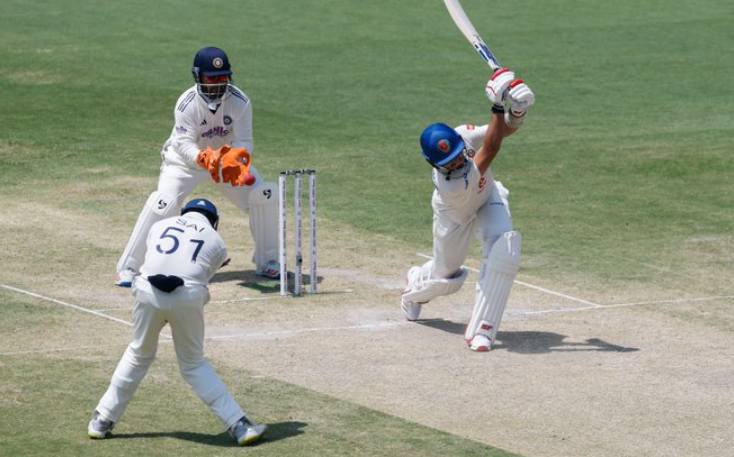
The most recent entry into Afghanistan’s lowest Test totals came during a one-off Test against India in Mullanpur, an encounter that vividly showcased India’s dominance across all departments. The match, played in 2026, saw India post a colossal first-innings total of 564/8 declared, with star batsmen Shubman Gill and KL Rahul leading the charge with magnificent centuries. This commanding total immediately placed Afghanistan under immense pressure, setting a daunting target for their response.
Facing India’s potent bowling attack, particularly their formidable spin contingent, Afghanistan’s batting lineup struggled to find any rhythm. In their first innings, they were bowled out for a mere 152, already highlighting the difficulties they faced. However, it was their second innings collapse that solidified this particular match’s place in their unwanted record books. The team lost wickets at regular intervals, unable to build any meaningful partnerships or withstand the relentless pressure exerted by the Indian bowlers.
While Sediqullah Atal displayed some resilience, battling hard for his 42 runs, and Rahmanullah Gurbaz contributed a brisk 24, the efforts of these individuals were not enough to stem the tide. The rest of the batting order succumbed quickly, unable to adapt to the challenging conditions and the quality of the bowling. India’s spin attack proved particularly devastating. Washington Sundar spearheaded the assault with an impressive four-wicket haul, demonstrating exceptional control and wicket-taking ability. He was ably supported by the seasoned Kuldeep Yadav and debutant Manav Suthar, both of whom maintained relentless pressure, ensuring there was no respite for the Afghan batsmen. The cumulative effect was Afghanistan being bowled out for just 112, leading to a massive innings-and-300-run victory for India, a result that underscored the gulf between the two teams on that occasion.
2. The Inaugural Test Challenge: 109 vs India, Bengaluru, 2018
Afghanistan’s journey in Test cricket began with a landmark moment in Bengaluru in 2018, as they played their first-ever Test match. This occasion was filled with immense pride and emotion for Afghan cricket, marking a significant milestone in their sporting history. However, the celebration on the field was tempered by the sheer dominance of the Indian side, who ensured that the debut was a stark introduction to the unforgiving nature of Test cricket.
Having been outplayed in their first innings and forced to follow on, Afghanistan faced the daunting task of batting again under pressure. The Indian bowlers, a blend of searing pace and incisive spin, were in full control. The wickets continued to tumble, preventing any substantial recovery or resistance from the Afghan batsmen. It was a relentless exhibition of disciplined bowling, exposing the inexperience of the visiting side against a world-class attack.
Veteran off-spinner Ravichandran Ashwin was instrumental in India’s bowling effort, exhibiting exceptional control, subtle variations, and an uncanny ability to exploit the conditions. He consistently troubled the Afghan lineup, proving to be the pick of the bowlers. Providing excellent support were the ever-reliable Ravindra Jadeja, whose left-arm spin added another dimension of threat, and the pace and aggression of Ishant Sharma, who unsettled batsmen with his bounce and movement. Under this sustained assault, Afghanistan’s second innings eventually collapsed for a paltry 109 runs, resulting in an innings defeat in their very first Test match. This performance, while disappointing, served as a crucial learning experience for the fledgling Test nation, highlighting the significant adjustments required to compete at the highest level of the game.
1. The Lowest Ebb: 103 vs India, Bengaluru, 2018
The lowest Test total ever recorded by Afghanistan also occurred in the same historic Bengaluru Test match of 2018, specifically in their first innings. Having won the toss and elected to bat, India had already asserted their authority by posting a formidable total of 474 runs. This massive first-innings score immediately placed Afghanistan under immense psychological and scoreboard pressure even before their batsmen took to the crease.
From the outset, the Afghan batters struggled to cope with the quality and intensity of the Indian bowling attack. The early loss of wickets set a precarious tone, and the team found themselves in deep trouble very quickly. Only Hashmatullah Shahidi managed to show some semblance of comfort and resistance during his brief stay, contributing a top score of 36 runs. His effort, while commendable, was an isolated instance of individual defiance amidst a collective struggle.
India’s bowling unit was ruthless in exploiting the conditions and the inexperience of the Afghan lineup. Ravindra Jadeja was particularly devastating, ripping through the batting order with his accurate left-arm spin, claiming an impressive four wickets. His ability to generate turn and bounce, combined with subtle changes in pace, proved too much for the Afghan batsmen. Complementing Jadeja’s spin wizardry was the pace and aggression of Umesh Yadav, who effectively used his speed and movement to claim three crucial wickets, dismantling the top and middle order. Afghanistan’s innings lasted a mere 38.4 overs, as they were bundled out for just 103 runs. This ignominious total remains their lowest in Test cricket history, a stark reminder of the challenges faced in their inaugural Test and the formidable opposition presented by the Indian team.
Lessons Learned and the Path Forward
These three instances of Afghanistan’s lowest Test totals, all occurring against India, underscore the demanding nature of Test cricket and the significant journey that lies ahead for the Afghan team. While their white-ball cricket has flourished, adapting to the nuances, mental resilience, and technical precision required for the longest format is an ongoing process. These matches against a cricketing powerhouse like India have provided invaluable, albeit harsh, lessons. They highlight the need for greater exposure to red-ball cricket at various levels, enhanced domestic first-class structures, and continued development of batsmen capable of building long innings under pressure.
Despite these early challenges, Afghanistan’s spirit and determination remain undimmed. Their rapid rise in international cricket is a testament to their talent and hard work. As they gain more experience in Test cricket, playing against diverse opponents and in different conditions, it is expected that their performances will mature, and they will gradually close the gap. The insights gained from these tough encounters against India will undoubtedly contribute to their growth, ultimately forging a stronger, more resilient Test team for the future.