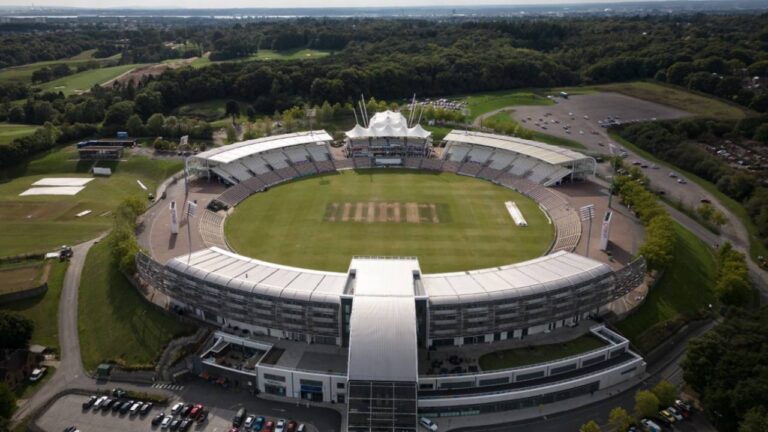
Lord’s pitch rated as ‘unsatisfactory’ following England’s first Test win

An Unprecedented ICC Ruling
The hallowed turf of Lord’s has long been regarded as the Home of Cricket, yet recent events have cast a shadow over its reputation. For the first time in its storied history, the venue has been slapped with an ‘unsatisfactory’ rating by the International Cricket Council (ICC). This decision follows the conclusion of the first Test match between England and New Zealand, which saw the pitch receive one demerit point under the governing body’s formal pitch and outfield monitoring process.
While England ultimately emerged victorious with a 115-run win, the match was a truncated affair. Despite the victory, the contest was marred by environmental factors and an aggressive surface, leading to the shortest completed Test match at Lord’s in nearly 140 years. All 40 wickets fell within 996 balls, raising serious questions about the balance between bat and ball at the top level of the game.
The Match Referee’s Assessment
Andy Pycroft, the ICC match referee, provided a scathing assessment of the conditions encountered during the match. He noted that the surface offered excessive seam movement throughout the duration of the contest. Furthermore, the ball displayed an alarming tendency to keep low, with bounce proving to be inconsistent for batters on both sides. The statistical evidence supports this, as 16 wickets tumbled on the first day alone, followed by another 17 on the second day. Pycroft concluded that the pitch suffered from an over-balance in favour of the bowlers, failing to provide a fair contest.
MCC and ECB Response
The report has been formally forwarded to the England & Wales Cricket Board (ECB). While the board has a 14-day window to appeal the sanction, the Marylebone Cricket Club (MCC), which operates Lord’s, has already taken accountability. MCC chief executive Rob Lawson acknowledged that the surface fell short of the high standards expected at such a prestigious venue. Lawson cited a difficult preparation period, noting that unseasonably hot weather in May, combined with subsequent rain, created significant challenges for head groundsman Karl McDermott and his team.
“We recognize that the pitch for this Test has shown more variable bounce than we would have wanted,” Lawson stated. “We hold ourselves to the highest standards and are naturally frustrated when a surface falls short of those expectations.”
Concerns for the Future of Test Cricket
The implications of this pitch rating go beyond a simple demerit point. England captain Ben Stokes was particularly vocal about how such surfaces impact the broader narrative of the five-day game. While acknowledging that players must adapt to challenging conditions, Stokes emphasized that extreme surfaces do not contribute to the long-term health of Test cricket. He noted that the game’s longevity is a frequent topic of debate, and ensuring that matches last the distance is crucial for the format’s survival.
“As someone who believes Test cricket should never disappear, that early finish is not ideal,” Stokes remarked. He highlighted that while it is the job of professional players to assess and overcome conditions, the production of such surfaces fails to provide the necessary stage for the game to flourish.
Impact on Spectators and Broader Context
The early conclusion of the match also had practical consequences for those in attendance. Due to the rapid fall of wickets and significant rain delays, ticket holders for the fourth day were entitled to 50% refunds, while those present on the third day received full refunds following a day where only 58 balls were bowled. The disappointment of the fans, who were denied a full four or five days of competition, underscores the importance of ground preparation.
It is worth noting that this is not an isolated incident in international cricket this season. The Gadaffi Stadium in Lahore, which hosted the third ODI between Pakistan and Australia, also received an ‘unsatisfactory’ rating. Match referee Graeme Labrooy criticized those conditions for being excessively ‘slow and low,’ which offered disproportionate assistance to spin bowlers. As cricket boards globally face pressure to produce balanced pitches, the developments at Lord’s serve as a stark reminder of the delicate science involved in groundskeeping and the ICC’s commitment to maintaining a level playing field for international competition.