“I’m sorry”: Monty Panesar issues public apology to Steve Smith over ball-tamper – Monty Panesar Apologizes to Steve Smith Following Ashes Controversy
Reflecting on a Heated Rivalry
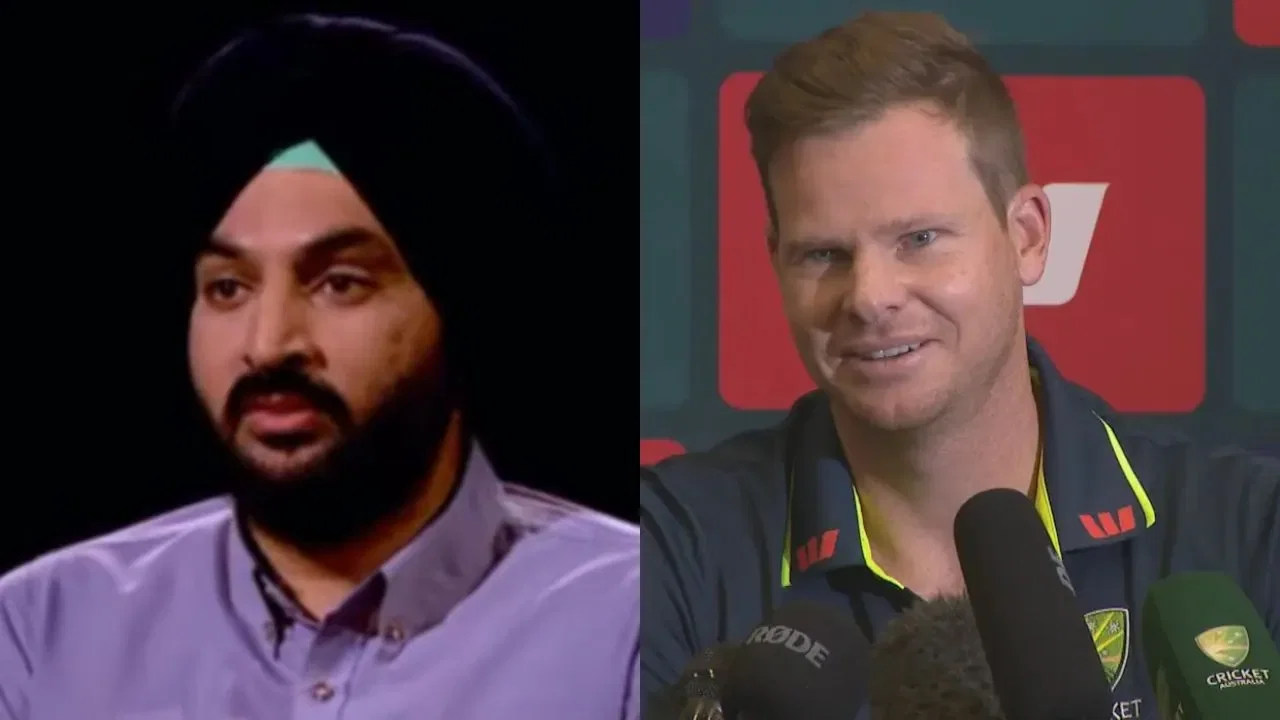
The intensity of the Ashes series often spills over into the media landscape long before the first ball is bowled. Recently, former England spinner Monty Panesar found himself at the center of such a discourse, having publicly expressed his regret over comments directed at Australian star Steve Smith. The remarks, made in the lead-up to the latest Ashes series, ignited a firestorm of debate regarding player conduct and the lingering shadows of the 2018 ball-tampering scandal.
The Root of the Controversy
In the weeks before the series commenced, Panesar had been vocal in his assessment of Steve Smith. He specifically questioned the decision to return Smith to the role of Australia’s captain, following his involvement in the notorious ball-tampering incident. Panesar suggested that English players should aim to make Smith feel ‘guilty’ about his past actions, while also urging the British media to apply consistent pressure, arguing that had the situation been reversed, the Australian press would have been relentless in their criticism.
Smith, however, did not take these comments lying down. During a pre-series press conference, the Australian batter deflected the criticism by highlighting Panesar’s 2019 appearance on the quiz show Mastermind. By mocking Panesar’s performance on the program, Smith effectively dismissed the spinner’s opinions, stating that he paid little heed to those who did not have their basics right.
A Change of Heart
Appearing on the Stick to Cricket Podcast alongside former England captains Michael Vaughan and Alastair Cook, as well as cricket legends David Lloyd and Phil Tufnell, Panesar revisited the incident. When pressed on his past comments and whether he had ever played alongside Smith, the former England spinner admitted that while he had never been a teammate of the Australian, he had certainly faced him on the field.
Reflecting on the fallout, Panesar expressed a clear desire to make amends. ‘I obviously came up with that statement, but now looking back at it, I think I’ll probably say sorry if I ever see him again,’ Panesar stated. ‘I’ll say sorry, I didn’t mean to say that kind of stuff about you.’ He acknowledged, however, that a reconciliation might be unlikely given the frosty nature of their public exchange.
Impact on the Field
Despite the regret, Panesar maintained that his words might have had a tangible impact on Smith’s focus. He pointed to the first Test in Perth, noting that Smith’s play-and-miss percentage was significantly higher than usual. According to Panesar, while Smith typically misses about 10% of deliveries in Australian conditions, the figure climbed to nearly 50% in the opening innings of that Test, suggesting the pressure might have rattled the batter.
Remembering Monty Panesar’s Legacy
Monty Panesar’s career remains a significant chapter in modern English cricket. Born to Indian parents in England, he broke new ground as the first Sikh player to represent the England national team, marking his debut against India in Nagpur in 2006. Over the course of his international career, which spanned from 2006 to 2013, Panesar earned 50 Test caps and claimed 164 wickets at an average of 34.71.
His contributions were vital to England’s success during a golden era of Test cricket. He played a pivotal role in the series victories in the 2009 and 2010/11 Ashes. Perhaps his most iconic performance came during the 2012 tour of India. In a series that England won 2-1, Panesar proved to be a formidable force on spin-friendly pitches, taking 17 wickets across three Tests. His performance in Mumbai, where he claimed an 11-wicket match haul—dismissing legends like Sachin Tendulkar and MS Dhoni twice—remains one of the high-water marks of his professional life.
As the cricketing world looks forward, this episode serves as a reminder of the fine line between competitive banter and personal critique. For Panesar, the focus has shifted from the heat of the moment to a more measured reflection on the professional respect required between rivals at the highest level of the game.