Sanju Samson vs Ruturaj Gaikwad: Who Should Captain CSK in IPL 2027?
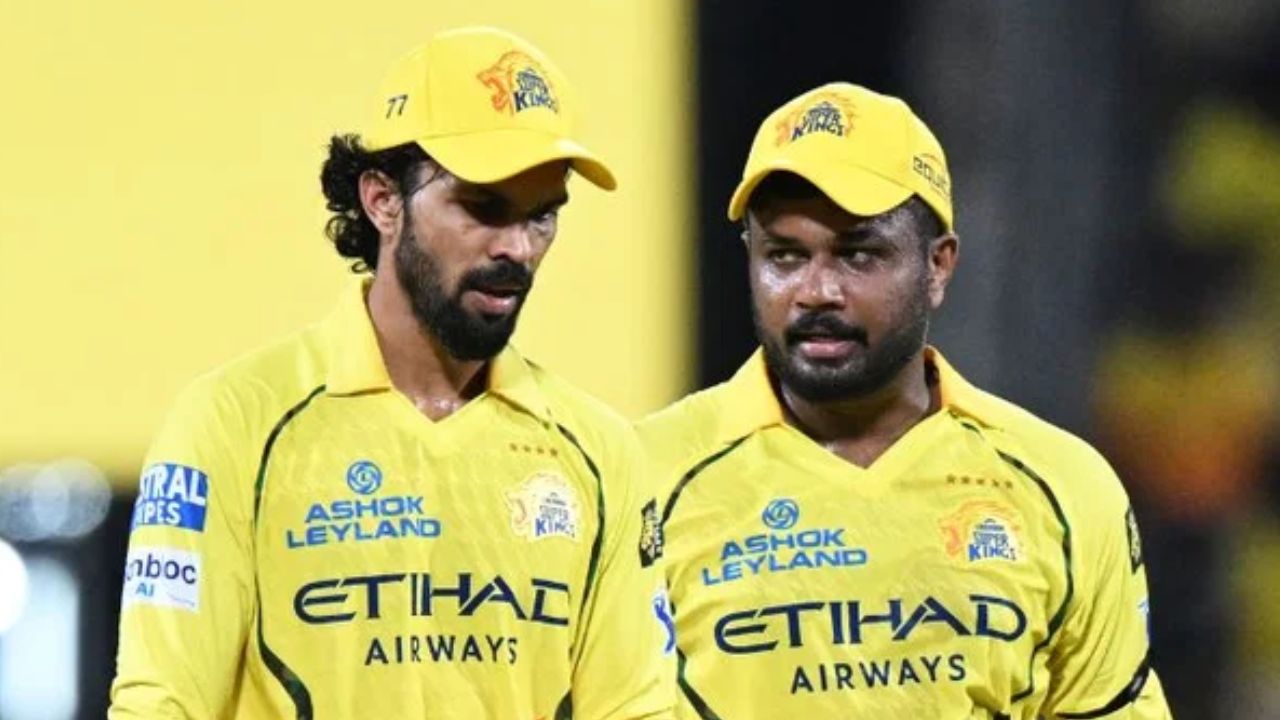
The Chennai Super Kings (CSK) faced a notably challenging IPL 2026 campaign, a performance that has brought Ruturaj Gaikwad’s leadership under intense scrutiny. A particularly damaging home defeat to Sunrisers Hyderabad effectively extinguished CSK’s playoff aspirations, prompting former cricketers and pundits to openly suggest a leadership change. Among the names being discussed as a potential successor, former Rajasthan Royals skipper Sanju Samson has emerged as a prominent candidate, given his quietly impressive captaincy resume.
Gaikwad’s two-year tenure at the helm of the five-time champions has, unfortunately, not yielded a top-four finish, a significant departure from CSK’s established legacy of consistent performance. Compounding the team’s struggles, Gaikwad’s individual batting form has experienced an alarming dip. In stark contrast, Sanju Samson has steadily cultivated a reputation as a capable and stable leader for the Rajasthan Royals, consistently guiding his team to competitive positions. As the whispers about a possible leadership overhaul grow louder within the CSK camp, a detailed statistical comparison of these two prominent Indian cricketers becomes imperative. This analysis will delve into their IPL captaincy records, batting performances under pressure, and tactical nuances to assess who might be the more suitable candidate for the coveted CSK captaincy ahead of IPL 2027.
Ruturaj Gaikwad’s CSK Captaincy: A Period of Mediocrity
Ruturaj Gaikwad assumed the challenging role of CSK captain in 2024, tasked with the unenviable brief of stepping into the colossal shoes of MS Dhoni, a figure synonymous with the franchise’s unparalleled success. Across his two complete seasons at the helm, the raw numbers present a rather sobering picture of his leadership.
In 32 Indian Premier League matches as CSK captain, Gaikwad has overseen 14 victories against 18 losses, resulting in a modest win/loss ratio of just 0.777. Crucially, under his leadership, the team has failed to reach the playoffs in either season, a stark deviation from CSK’s historical standard. The 2026 season, in particular, proved to be grim, leaving CSK mathematically alive but heavily reliant on a complex series of external results to even stand a chance of progression. This lack of consistent performance and inability to secure knockout berths has naturally fueled the criticism surrounding his captaincy.
Beyond the team’s performance, Ruturaj Gaikwad’s individual returns as captain in the IPL have been termed modest. He has accumulated 1,026 runs in 32 innings while leading CSK, at an average of 38.00, including one century. While this average appears respectable on the surface, it conceals a significant decline in his form during the critical 2026 season. In the most recent campaign, he managed only 321 runs at a subdued average of 29.18, coupled with a strike rate of 120.68. These figures fall considerably short of the aggressive batting benchmarks expected in modern T20 cricket, where power-hitting and rapid scoring are paramount.
Expanding the scope to his wider captaincy career across all T20s, including domestic fixtures, the trend remains similar. In 54 matches as captain, he holds an overall average of 40.17. However, his underwhelming 2026 IPL numbers have notably pulled down this overall average, indicating a period of struggle under the highest pressure. This suggests that while he has shown promise in other formats or less intense scenarios, the IPL captaincy has presented a unique challenge that has impacted his personal output.
Gaikwad’s Batting as a Pure Batter: A Different Story
Interestingly, a closer look at Gaikwad’s IPL numbers when he was not burdened by captaincy responsibilities reveals a striking similarity. As a pure batter, he averaged 39.06 in 52 matches, a figure almost identical to his captaincy average. This suggests that, unlike some players who thrive or falter under the added responsibility, leadership has not provided a significant uplift or detriment to his inherent batting ability. It merely showcases a consistent level of performance, which, while good, hasn’t scaled up to match the demands of leading a high-profile franchise like CSK.
Furthermore, Gaikwad exhibits a noticeable home-away split in his batting averages as captain. At the familiar confines of Chepauk, he boasts a commanding average of 59.11, indicating a strong comfort level and effectiveness in home conditions. However, this impressive figure plummets dramatically to 26.11 when playing away from Chennai, highlighting a significant dependency on home ground advantages. This inconsistency in varied conditions is a critical factor when evaluating a potential long-term leader for a team that must perform across diverse venues.
Sanju Samson’s IPL Captaincy Record: Stability and Improvement
Sanju Samson has led the Rajasthan Royals since 2021, and while his tenure has yet to culminate in a trophy, it has been remarkably more stable and progressive than Gaikwad’s brief stint. Samson has consistently guided the Royals to be competitive, often punching above their weight with a squad that sometimes lacked the star power of other franchises.
In 67 IPL matches as RR captain, Samson has recorded 33 wins, 32 losses, one tie, and one no-result, translating to a respectable win/loss ratio of 1.031. Under his leadership, the Rajasthan Royals have consistently been contenders for playoff spots, notably reaching the knockout rounds on two separate occasions. This record stands in stark contrast to CSK’s recent performance under Gaikwad, illustrating a more consistent ability to keep his team in contention year after year.
Crucially, Samson’s batting performance as captain has shown a distinct upward trajectory, indicating that the added responsibility has enhanced his game rather than hindered it. In the IPL alone, he averages 36.08 as captain, with a highest score of 119. When his entire captaincy record across all T20 formats is considered – spanning 105 matches – his average rises further to 36.63, accumulating nearly 3,114 runs. This upward trend suggests a player who thrives under the pressure of leadership, using it to bring a new layer of focus and maturity to his game, a quality highly desirable in a captain.
Samson’s Performance Not As a Captain: What the Numbers Indicate?
To further underscore the positive impact of captaincy on Samson, it is worth noting his statistics as a non-captain in the IPL. In 123 innings where he played purely as a batter, Samson averaged just 29.81. This significant difference in averages – an improvement of over 6 runs per innings when leading – strongly suggests that the captaincy has indeed brought a new level of focus, responsibility, and maturity to his overall game, enabling him to perform at a higher individual level.
Samson’s recent form further strengthens his case. In the 2025 and 2026 domestic and IPL seasons, his captaincy average has remained impressively healthy. He averaged 46.55 in 2025 and an even more remarkable 58.25 in the early sample of 2026 domestic matches. This sustained high-level performance underscores his current peak form and consistent ability to deliver both with the bat and as a leader.
Moreover, Samson has demonstrated greater consistency in both home and away conditions. As captain, he averages 35.61 at home and 37.95 away, presenting a far more balanced spread compared to Gaikwad’s heavy reliance on home advantages. This adaptability across different venues is a testament to his robust technique and mental fortitude, essential traits for any captain navigating the diverse challenges of the IPL.
Tactical and Batting Differences: Gaikwad vs. Samson
Beyond individual statistics, the tactical approaches and batting styles of Gaikwad and Samson as captains present further contrasts. As captain, Gaikwad tends to thrive when CSK bats first, preferring to set a target. His average in such matches stands at 47.34, and a significant portion of CSK’s victories under his leadership have come from successfully defending totals. However, when tasked with chasing, a crucial aspect of T20 cricket, his average drops to 30.36, and CSK’s record while fielding first and chasing has been notably poor. This indicates a potential vulnerability in managing high-pressure run-chases, a skill often defining successful T20 captains.
Conversely, Sanju Samson emerges as a more adept second-innings captain. He averages an impressive 39.87 when his team fields first and is then required to chase a target, compared to 33.61 when batting first. This statistical inclination suggests that Samson possesses a superior ability to manage a chase, strategize effectively under pressure, and guide his team through the complexities of setting and achieving targets. His temperament and tactical acumen appear better suited to adapting to match situations, a vital attribute in the dynamic T20 format.
The team numbers also paint a revealing picture. Under Gaikwad, CSK have scored at a marginally higher rate, averaging 9.15 runs per over compared to RR’s 8.86 under Samson. However, this slightly higher scoring rate for CSK is often negated by their tendency to concede more runs and, consequently, win fewer games. This implies that while CSK might be aggressive with the bat, their overall game management, particularly in bowling and fielding, might be less efficient under Gaikwad’s leadership.
In contrast, Rajasthan Royals’ slightly lower scoring rate under Samson is often offset by what appears to be smarter in-game management and a more cohesive team strategy, ultimately resulting in a superior win/loss ratio. Samson’s RR side has consistently hovered around the 50% win mark, demonstrating a stable and competitive performance level, whereas Gaikwad’s CSK has unfortunately slipped below this benchmark. This consistency, even with potentially fewer “superstar” players, speaks volumes about Samson’s ability to maximize his team’s potential.
Conclusion: Who Is Better Suited for CSK?
Given CSK’s long-standing philosophy of fostering stable and long-term leadership, changing a captain is undoubtedly a monumental decision, often undertaken with great reluctance. However, the comprehensive statistical analysis presented here lends considerable weight to the argument for a re-evaluation of the team’s leadership structure. While Ruturaj Gaikwad is a talented batter, his captaincy record over the past two seasons, particularly the disappointing IPL 2026 campaign, indicates a period of struggle and a failure to deliver the consistent playoff berths that CSK fans have come to expect.
Sanju Samson, on the other hand, stands out as a proven IPL captain with over five years of valuable experience at the helm of Rajasthan Royals. His track record boasts a superior win/loss ratio and a consistent ability to guide his team into contention for knockout rounds. More impressively, the captaincy has visibly elevated his individual batting performance, showcasing a player who thrives under pressure and responsibility. He would undoubtedly inherit a team in transition at CSK, but one that still possesses a wealth of match-winners and a robust infrastructure.
While Gaikwad technically lost his chance to prove his long-term captaincy mettle in IPL 2026 and must now look forward to the next season, the statistical edge in this detailed comparison firmly belongs to Sanju Samson. Without a drastic and undeniable turnaround in both team performance and his individual captaincy metrics in IPL 2027, the calls for a leadership change will only intensify. The data suggests that for CSK to return to their accustomed place among the IPL’s elite, a fresh perspective at the captaincy might be precisely what is needed, and Sanju Samson presents a compelling case as that alternative.