West Indies Triumph: Campbelle, Matthews Outmuscle New Zealand to Land Famous Victory
The roar of the crowd, the tension palpable, and a finish that kept everyone on the edge of their seats – this was no ordinary T20 International. The West Indies, often known for their flair and power, delivered a performance that will be etched in the annals of women’s cricket history. They didn’t just win; they outfought and outpowered a formidable New Zealand side, showcasing a raw display of hitting and an unwavering spirit.
Campbelle’s Masterclass and Matthews’ Crucial Contribution
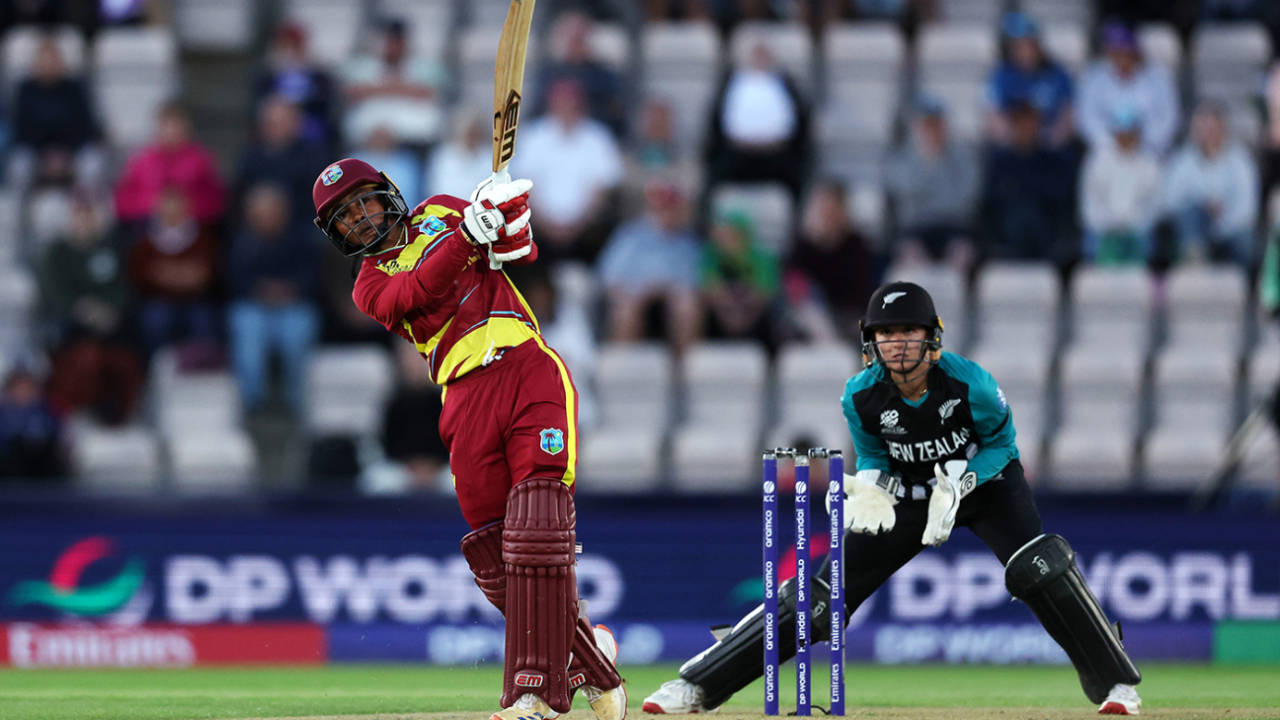
At the heart of this stunning victory was Shemaine Campbelle, who elevated her maiden T20I fifty into a match-winning masterpiece. Her unbeaten 90 runs, crafted from just 62 balls, was a testament to her composure and power. With seven boundaries and three towering sixes, Campbelle systematically dismantled the New Zealand bowling attack, converting pressure into runs and momentum into victory.
The chase of 163, a taxing target by any measure, hinged significantly on the 74-run partnership between Campbelle and her captain, Hayley Matthews. Matthews, who had to quickly regain her focus after a chaotic second-over run-out involving opening partner Qiana Joseph, played a vital role in setting the tempo. Her 48 runs from 37 balls provided the stability and impetus needed, peppered with timely boundaries that kept the scoreboard ticking and the required run rate manageable.
New Zealand’s frustration was evident throughout the innings, particularly with their fielding. No fewer than seven clear-cut catching opportunities were squandered, not to mention countless instances where balls weren’t gathered cleanly or throws missed their mark. These errors, induced by the relentless pressure applied by the West Indies batters, proved incredibly costly. Each dropped catch was a lifeline, and Campbelle and Matthews capitalized on every single one.
A Nail-Biting Finish
The match culminated in an extraordinarily tense final over. With just four runs needed for victory and only Sophie Devine, New Zealand’s veteran all-rounder, left to bowl, the tension was unbearable. Devine, known for her ability to pull off miracles, conceded two runs off the first ball. She then remarkably restricted the West Indies to two scrambled leg-byes over the next four deliveries, leaving the fate of the match in Campbelle’s hands on the very last ball. An air-shot from Jahzara Claxton had added to the drama, but Campbelle, with steely resolve, put her head down for one final charge. She lunged, connected, and beat Izzy Gaze’s frantic attempt at breaking the stumps by the narrowest of margins, securing a famous, unforgettable victory for the West Indies.
Drama Unfolds: Run-Outs and Dropped Catches
The early stages of the West Indies innings were not without their dramatic moments. The innings was barely ten balls old when an unfortunate incident unfolded. Hayley Matthews, after confidently lacing back-to-back fours through deep third off Bree Illing, instinctively set off for a single after patting a third shot in the same direction. There was never a realistic chance, as the point fielder charged in quickly. Instead of accepting her own fate, Matthews’ decision led to a dumbfounded Qiana Joseph being sacrificed at the non-striker’s end. Joseph was visibly furious, bumping shoulders with her captain and expressing her indignation as she trudged back to the pavilion.
Joseph’s anger could have been further validated just two balls later when a top-edged sweep from Matthews sailed high towards deep backward square. However, Izzy Sharp made a meal of the opportunity, dropping what should have been a straightforward catch. Matthews, perhaps chastened by the run-out and hampered by a bout of cramp after a tight second run, was subdued for the remainder of the 35-run powerplay. Yet, the longer she remained at the crease, the more unsettled New Zealand’s fielders became.
The seventh over proved pivotal, yielding 13 runs for the West Indies. This over also saw Melie Kerr make a questionable review for LBW, a decision that came straight off the toe of Matthews’ bat, much to New Zealand’s chagrin. Moments later, Campbelle, who was steadily accumulating runs on 19 off a run-a-ball, survived a glaring stumping chance from Gaze after running past Sophie Devine’s first ball of the night. The misses continued when Melie Kerr believed she had a breakthrough, appealing for an LBW against Campbelle who missed a reverse sweep on 24, but the replays showed the ball striking outside the line of off-stump.
The floodgates of fielding errors truly opened when Matthews unleashed her most powerful shot of the night – a massive inside-out six over extra cover. Immediately after, Nensi Patel dropped a leading edge off her own bowling, granting Matthews yet another life. Just one ball later, Melie Kerr herself spilled an absolute dolly on the cover ring as Campbelle miscued a hoick down the ground. These consecutive blunders highlighted the mounting pressure and the unraveling composure of the New Zealand side, turning what could have been crucial wickets into momentum-shifting opportunities for the West Indies.
New Zealand’s Blazing Start and Alleyne’s Decisive Spell
New Zealand’s innings had begun with a stark contrast to their eventual fielding woes, radiating confidence and enterprise. Izzy Gaze launched their innings with a fierce attack, taking advantage of glorious batting conditions. Twice in the opening over, she guided Zaida James behind square on the off-side with precision. Within the first five overs, Gaze had already picked off eight fours, dominating the early exchanges almost before her new opening partner, Georgia Plimmer, had a chance to settle.
However, even Gaze benefited from an early reprieve. In the third over, Hayley Matthews stooped to her right but failed to cling onto a regulation return chance, compounding her frustration when Gaze then struck three more fours in her very next over, racing to 37 from just 23 balls. At 49 for 0 in the sixth over, the defending champions were playing with the freedom their captain, Melie Kerr, had promised on the eve of their campaign, looking set for a formidable total.
Aaliyah Alleyne’s Game-Changing Performance
It was Aaliyah Alleyne, with her unassuming yet highly effective medium pace and nagging high action, who orchestrated the West Indies’ roaring comeback. She single-handedly put the skids under New Zealand’s dominant start, claiming three crucial wickets in a breathtaking span of just six balls. First to succumb was Georgia Plimmer, who attempted to launch a short ball high over the leg-side but found the safe hands of Deandra Dottin at deep backward square, ending a promising partnership.
After Melie Kerr announced her intentions with a ramp shot for four through deep third, Alleyne ripped the heart out of New Zealand’s middle order with a devastating rinse-and-repeat pair of breakthroughs. Kerr, attempting to launch her next delivery clean down the ground, found herself cramped for room as Alleyne shaped the full-length ball into her pads. Karishma Ramharack then scooped up her mistimed shot at mid-on. Moments later, after a first-ball single for the incoming Sophie Devine, Izzy Gaze gave her wicket away in identical fashion. Another fluffed drive through the line looped off the toe of the bat, allowing Ramharack to seal the deal once more. In a dramatic turn of events, New Zealand found themselves at 56 for 3 in the eighth over, their flying start abruptly halted and momentum completely shifted.
Halliday and Green’s Late Surge for New Zealand
New Zealand had hinted at a changing of the guard even before the match, with the notable absence of Suzie Bates from their XI for the first time in the entire history of the Women’s T20 World Cup. However, another veteran, Sophie Devine, stepped up to perform a crucial holding role. Just weeks after her incredible knock of 87 from 57 balls had rescued New Zealand from a precarious 11 for 4 against England, Devine joined Brooke Halliday in a vital injection of impetus to steady the innings.
Devine contributed 22 from 15 balls before succumbing to another sharp catch in the deep, this time from Jahzara Claxton. Yet, her partnership of 45 runs from just 29 balls with Halliday helped signal New Zealand’s charge through the latter part of their innings. Halliday then took control, alternating powerful thumps down the ground with expertly timed reverse-sweeps, accumulating a valuable 40 runs from 32 deliveries. Alleyne, inevitably, was the one to induce another scuffed shot to mid-on, closing out her impressive figures of 4 for 27, a truly impactful performance.
Despite these setbacks, New Zealand weren’t finished. Maddy Green unleashed a late assault in the closing overs, smashing an unbeaten 35 from just 22 balls. Her innings included a lusty straight six off Fletcher and four fours from her final eight balls, as the West Indies struggled to close out their battling display in the field. Ultimately, while New Zealand fought hard, their struggles with consistency and fielding errors were not a patch on the magnificent, determined performance put forth by the West Indies batters. This memorable encounter highlighted the thrilling unpredictability of T20 cricket and the sheer power of an inspired batting display.