Why Pakistan’s Pace Attack Is Declining: Umar Gul Explains the Struggle
The End of an Era or a Temporary Dip?
For decades, Pakistan cricket was synonymous with raw, terrifying pace. From the lethal swing of Wasim Akram and the devastating reverse-swing of Waqar Younis to the blistering speed of Shoaib Akhtar, the nation earned its reputation as the world’s premier factory for fast bowlers. However, in recent times, the narrative has shifted. Observers and fans alike have noted that the current crop of pacers is struggling to consistently exceed the 135 kph mark. As concerns grow, former fast bowler and current coach Umar Gul has stepped forward to provide insight into why the pace has seemingly vanished.
Addressing the Bangladesh Series Struggles
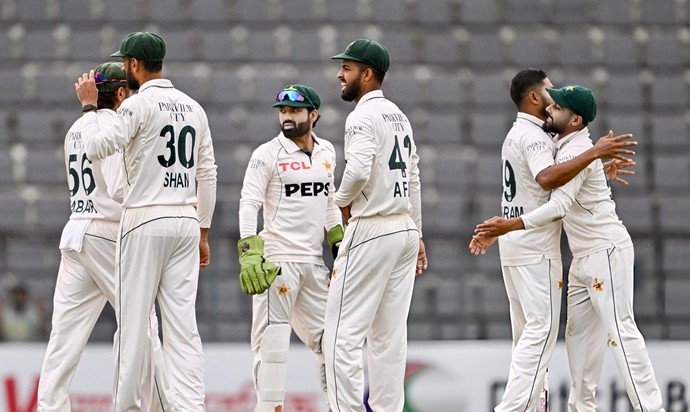
Gul’s perspective on the recent series against Bangladesh is nuanced. He cautions against scapegoating the bowlers entirely, noting that the performance was a result of several converging factors. The opposition batters, he argues, performed exceptionally well, often showing grit that neutralised the threat posed by Pakistan’s attack. Furthermore, the rub of the green simply wasn’t with the bowling unit.
“Bangladeshi batters have batted really well,” Gul explained. “In some moments, we were unlucky. We missed chances in reviews and couldn’t get Litton Das out. But that’s part of cricket. Sometimes luck is on your side, sometimes it isn’t. The bowlers tried hard, but the results didn’t go our way.”
The Red-Ball Rhythm Deficit
When pressed on why the pace specifically appears to have dipped, Gul was quick to disagree with the notion of a permanent decline. He highlighted a distinct gap between the performance of bowlers in white-ball formats versus their output in the Test arena. According to Gul, the issue is not a lack of talent or innate speed, but rather a lack of red-ball rhythm.
“We still have bowlers who can bowl 140 kph in PSL and ODI cricket,” Gul noted. “But in red-ball cricket, the pace drops a bit. We don’t play enough Test cricket these days. Because of that, bowling muscles and bowling memory don’t develop properly. Both mental and physical preparation are important. The bowlers have given everything, they are bowling long spells.”
The Impact of Scheduling and Preparation
A major point of contention in modern cricket is the hectic calendar, which often forces players to switch between formats with minimal recovery or transition time. Gul highlighted that the long hiatus from red-ball cricket—with the last appearance dating back to October—has hampered the team’s ability to hit the ground running. When players return to the longest format after a six-month break, their bodies and minds struggle to adapt to the rigors of bowling long, demanding spells in humid conditions.
“The last time we played red-ball cricket was in October. After more than six months, we came back again. So maybe the pace looks slightly down, but the energy is still there. On top of that, the heat and humidity here also play a role,” he explained.
The Need for Better Match Practice
Finally, Gul admitted that the lack of adequate preparation time before touring was a significant hurdle. While the coaching staff worked diligently with the available players in camp, the absence of sufficient red-ball match practice left the bowlers underprepared for the intensity of international Test matches.
“Before any series, preparation in that format is important. But because of scheduling, PSL and other commitments, we worked with the players we had in camp. We didn’t get enough match practice after that. Even in Karachi, the conditions were very hot,” Gul concluded. As Pakistan looks to the future, it is clear that the solution to restoring their pace legacy lies not just in the talent they possess, but in the structured preparation and match exposure required to hone it.