Why Rohit Sharma Is A Complete No Go For Mumbai Indians’ Captaincy? – Why Rohit Sharma Should Not Return as Mumbai Indians Captain
The Captaincy Dilemma at Mumbai Indians
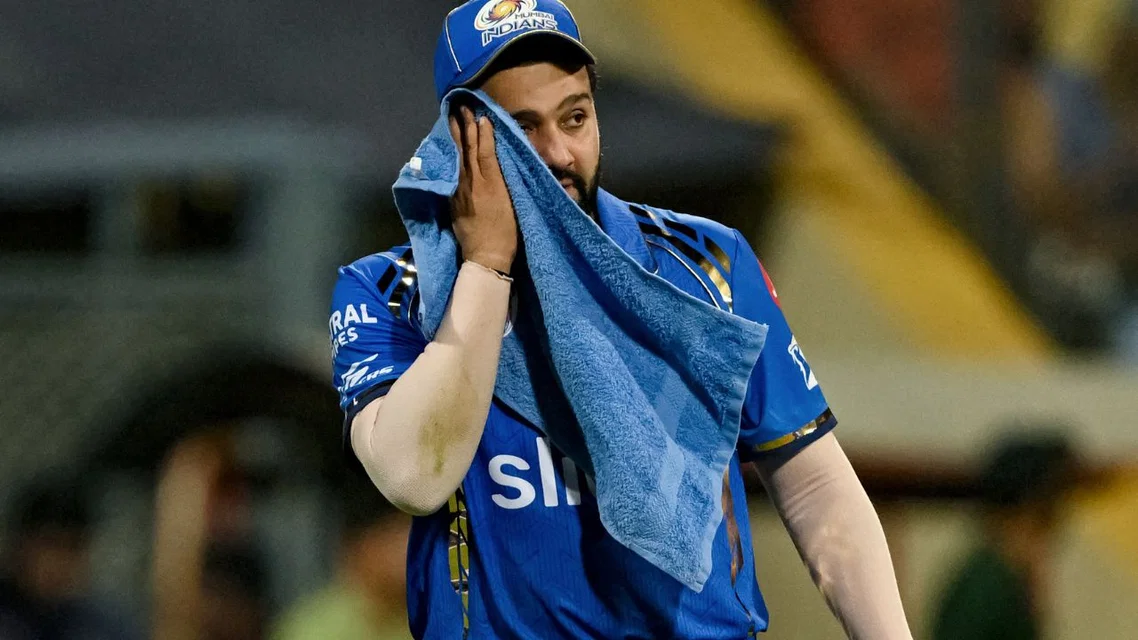
Rohit Sharma is, without question, one of the most iconic figures in the history of the Indian Premier League. As the man who transformed the Mumbai Indians into a perennial championship machine, his legacy is etched in gold. However, the world of T20 cricket is defined by its relentless pace, and in the high-stakes environment of franchise cricket, emotional decisions rarely align with the strategic requirements of building a sustainable future. With reports circulating that Hardik Pandya may not continue in the role, the debate regarding Rohit Sharma’s return to the helm has dominated headlines. Yet, a dispassionate look at the facts suggests that reinstating him as captain would be a strategic error for the franchise.
1. The Batting Performance Question
Perhaps the most significant concern regarding Rohit Sharma’s recent IPL tenure is his individual output with the bat. For nearly a decade, the veteran opener has struggled to reach his true potential, failing to register a single 600-run season throughout his illustrious career. The last time he crossed the 500-run threshold in an IPL campaign was back in 2013, a statistic that feels increasingly jarring in an era where top-order consistency is the bedrock of every successful side.
Looking at the landscape of the IPL in 2026, the elite teams are powered by consistent run-getters like Virat Kohli, Abhishek Sharma, and Shubman Gill. Mumbai Indians have found it difficult to achieve that same level of reliable, high-volume scoring from their former captain. Furthermore, his strike-rate has struggled to keep pace with modern demands. Having only eclipsed a 150 strike-rate once in the last five seasons, one must consider whether adding the burden of captaincy would further hinder his ability to play with the freedom required in the modern game.
2. The Imperative of Long-Term Planning
Mumbai Indians made the difficult decision to transition away from Rohit Sharma to Hardik Pandya, a move clearly aimed at shifting toward a younger leadership core. Regardless of fan sentiment, the franchise identified a need to look beyond the immediate cycle. Rohit Sharma is approaching 40, and from a management perspective, it is nearly impossible to build a long-term future around a player at this stage of his career, especially with the monumental shift expected in the 2028 mega auction.
The franchise needs to identify and nurture a younger captain today to ensure stability as they enter the next era of the IPL. Reverting to older options, while emotionally appealing, effectively stalls the necessary transition process. Mumbai Indians have historically dominated the league because they stayed ahead of the curve in their planning. Continuing to lean on the past rather than investing in the future risks stagnation.
3. The Recent Captaincy Record
It is impossible to ignore the five trophies Rohit Sharma secured for the franchise; however, it is equally important to address the reality of his final seasons as leader. Following their triumph in 2020, Mumbai Indians failed to secure a title in 2021, 2022, and 2023. For a franchise of such stature, a three-year trophy drought signaled a clear decline. The reality is that the team’s struggles during this transition phase actually predated the move to Hardik Pandya.
The departure of legendary figures like Lasith Malinga and Kieron Pollard left a void that proved difficult to fill. The team struggled to adapt to these changes, and the subsequent period of instability under Rohit’s leadership highlighted that the transition was not as seamless as many might assume. While Hardik Pandya has faced his own set of challenges, the issues within the squad were already manifesting long before he was handed the captaincy. Moving forward, the focus for Mumbai Indians must remain on strategic evolution rather than revisiting a chapter that has already concluded.
Ultimately, while Rohit Sharma remains a legendary figure for the Mumbai Indians, the franchise must weigh his historic contributions against the cold, hard requirements of modern cricket. A return to his captaincy would be a short-term solution to a long-term problem, one that could ultimately hamper the team’s ability to remain competitive in the seasons to come.