‘High-quality’ Saleem limits damage despite extreme heat and unhelpful pitch
A Heroic Spell in Sweltering Conditions
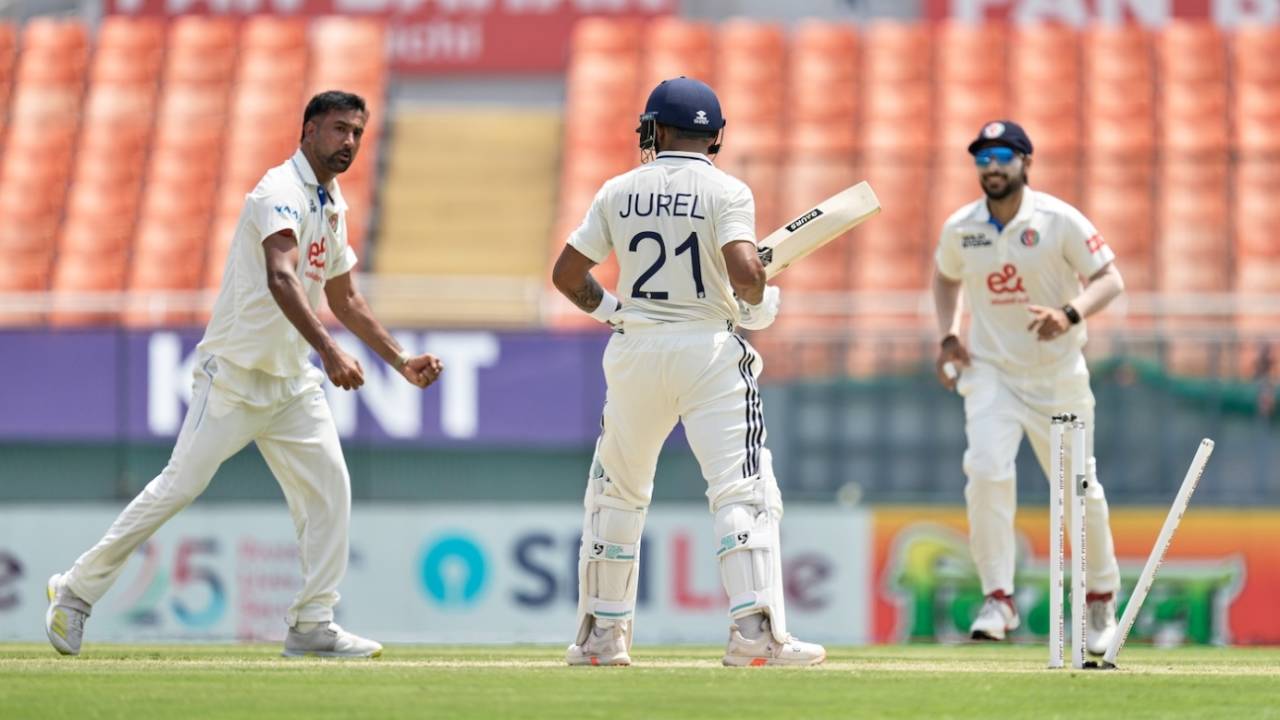
In the high-pressure environment of a one-off Test match in New Chandigarh, Afghanistan fast bowler Mohammad Saleem emerged as the singular bright spot for the touring side. While his team eventually found themselves reeling at 113 for 5, trailing India by 451 runs at stumps on day two, Saleem’s individual effort earned widespread acclaim. Facing oppressive heat and a surface that offered little assistance to the pace bowlers, Saleem managed a remarkable return of 6 for 140 in India’s mammoth first innings.
His performance was defined not just by the sheer number of wickets, but by the relentless discipline he displayed throughout the innings. Bowling consistently at speeds around 140kph, Saleem remained a threat even when the conditions suggested the game might drift away from the visitors. After claiming the wickets of Yashasvi Jaiswal and B Sai Sudharsan on Saturday, he returned to dismiss the dangerous Shubman Gill, who had reached 126, with the second new ball.
Defining the ‘High-Quality’ Bowling Standard
The praise for Saleem was swift and unanimous. Afghanistan head coach Richard Pybus lauded the bowler’s ability to remain effective in such harsh conditions. “He was just fantastic,” Pybus remarked. “If you come here and you take six wickets in extreme heat against high-quality batting, that goes very well – not just for him as a bowler, but for us as a side. He just held a length. And I think if you hold a length, you’re in the game the whole time.”
The admiration was echoed by India’s own camp, with allrounder Washington Sundar acknowledging the difficulty of the task. Sundar highlighted that the surface was far from ideal for seam bowlers. “That was honestly high-quality bowling,” Sundar noted. “There was not much in the pitch for the seamers. Only when you hit the seam over a period of time, you sort of get a little bit of purchase. To hit the seam consistently over a number of overs takes a lot of skill and attitude.” Sundar further highlighted Saleem’s physical toughness, noting the long, grueling spells the bowler maintained throughout the innings.
The Cost of Hesitation: The DRS Dilemma
While Saleem provided moments of brilliance, the broader narrative for Afghanistan was marred by a clear lack of conviction in their decision-making, particularly regarding the Decision Review System (DRS). Throughout the match, several missed opportunities to challenge umpire decisions proved costly.
On the second day, during the 89th over of India’s innings, Azmatullah Omarzai saw two separate appeals turned down by umpire Sharfuddoula. Despite subsequent replays confirming that both Shubman Gill and Rishabh Pant were out, Afghanistan opted against using the DRS. This followed a similar lapse on Saturday, when KL Rahul was given not out despite being caught behind on 16; Rahul eventually capitalized on the reprieve to score a century.
Head coach Richard Pybus was candid about these tactical failures. “We were exceptionally rusty,” he admitted. “Without throwing anybody under the bus, I think there was a lack of conviction in decision-making.” He explained that the complexity of the review process—involving the captain, the wicketkeeper, and the bowler—had broken down under pressure. “The skipper has got a very short period of time to make those decisions. We chatted about it afterwards because we were obviously way off the pace with that, and it cost us.”
Looking Ahead
As the match progresses, the focus for Afghanistan remains on steadying the ship. While Saleem’s six-wicket haul provides a blueprint for how to operate on unhelpful surfaces, the collective batting unit must find a way to navigate the Indian spin and pace attack to stay competitive. The frustration of missed reviews serves as a stark reminder of the fine margins in Test cricket, where a single moment of hesitation can shift the momentum of an entire game. For Saleem, however, the performance stands as a testament to his character and skill in the face of adversity, marking him as a pivotal figure for the future of Afghanistan cricket.