India hand Rawat debut cap and bat in Harmanpreet’s 200th T20I: A Landmark Match at Old Trafford
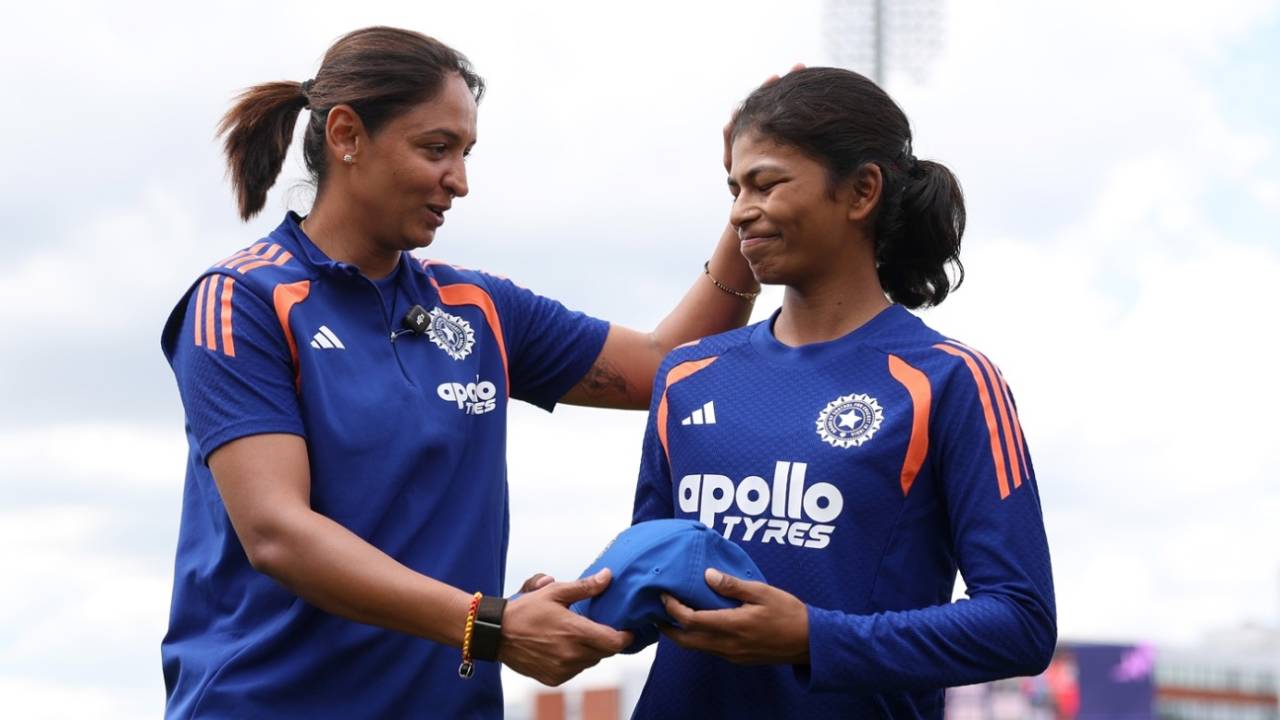
Old Trafford witnessed a significant day for Indian women’s cricket as captain Harmanpreet Kaur stepped onto the field for her record 200th T20 International. This landmark occasion was further highlighted by the international debut of leg-spinner Prema Rawat, who was handed her maiden India cap. The match, part of a crucial T20 World Cup fixture against South Africa, promised an exciting contest under bright sunshine, with India choosing to bat first after Harmanpreet won the toss.
Harmanpreet Kaur’s Historic 200th T20I Appearance
Harmanpreet Kaur’s achievement of playing 200 T20Is solidifies her status as one of the most enduring and impactful players in the history of women’s cricket. Her journey has been marked by fearless batting, astute leadership, and a consistent ability to perform under pressure. Reaching this milestone in a T20 World Cup game underscores her dedication and longevity in the format. As captain, her decision to bat first reflected confidence in her side’s batting prowess and a desire to set a strong total on what was described as a “very good pitch.” This significant match not only celebrated her personal milestone but also served as a crucial encounter in India’s World Cup campaign.
Prema Rawat’s International Debut and India’s Team Changes
The spotlight also shone brightly on Prema Rawat, the talented leg-spinner from Uttarakhand, who earned her first international cap. Her inclusion in the playing XI was a testament to her consistent performances in the domestic circuit and her emerging talent showcased with Royal Challengers Bengaluru (RCB) in the Women’s Premier League (WPL). Rawat replaced the injured Shreyanka Patil in the 15-member squad and was given the nod ahead of experienced spin-bowling allrounder Radha Yadav, indicating the team management’s confidence in her abilities to make an immediate impact. This debut added another layer of excitement to the match, particularly given the dry nature of the pitch which could favor spinners.
India made a total of two changes for this critical encounter. Besides Rawat’s debut, fast bowler Arundhati Reddy made her return to the squad. Reddy had missed India’s previous game against the Netherlands and her re-entry into the XI came at the expense of Kranti Gaud. Gaud had struggled to make an impression in recent matches, going wicketless in India’s first two World Cup games and also in the preceding warm-up fixtures. The inclusion of Reddy meant India entered the field with a balanced bowling attack, featuring two fast bowlers and three frontline spinners, designed to exploit the conditions and defend any target they might set.
South Africa’s Strategic Adjustments
South Africa, under the leadership of Laura Wolvaardt, also opted for two changes, signaling their intent to strengthen their side for this important clash. They would have ideally preferred to bat first themselves, highlighting the perceived advantage of setting a score on this particular surface. Tazmin Brits was brought into the team, replacing Sune Luus, who had a challenging start to the tournament with scores of 5 and 1 against Pakistan and Australia, respectively. The other significant change saw the return of veteran all-rounder Dane van Niekerk. Van Niekerk stepped in for Kayla Reyneke, who had also struggled for runs, scoring 2 and 0 in her outings. This match marked van Niekerk’s first T20 World Cup appearance since the 2020 edition in Australia, where South Africa were eliminated by the hosts in the semi-final. Her experience and all-round capabilities were expected to provide a substantial boost to the Proteas’ lineup.
Pitch Report and Match Context
The match was played on a fresh pitch at Old Trafford, which appeared notably dry. This characteristic typically favors spinners as the game progresses, offering turn and grip. The square boundaries were described as equidistant, which could encourage batters to target specific areas and provide opportunities for both aggressive strokeplay and clever shot placement. This was also a historic meeting, marking the first time India and South Africa have faced each other in the Women’s T20 World Cup. Their last bilateral series, held in South Africa, saw the hosts dominate, winning 4-1. This history added an extra layer of competitive intensity to the World Cup fixture, with both teams eager to assert their dominance.
The strategic decisions made at the toss, particularly India’s choice to bat, were heavily influenced by these pitch conditions. Harmanpreet’s side aimed to put runs on the board and then unleash their spin attack, spearheaded by Deepti Sharma, N Shree Charani, Nandani Sharma, and now Prema Rawat, to restrict the South African chase. The early stages of the innings would be crucial for India to capitalize on the fresh wicket before it potentially slowed down further.
Line-ups for the Clash
The confirmed playing XIs for both teams provided a clear picture of their strategies:
India Playing XI:
- 1 Shafali Verma
- 2 Smriti Mandhana
- 3 Yastika Bhatia
- 4 Jemimah Rodrigues
- 5 Harmanpreet Kaur (capt)
- 6 Richa Ghosh (wk)
- 7 Deepti Sharma
- 8 Prema Rawat
- 9 Arundhati Reddy
- 10 N Shree Charani
- 11 Nandani Sharma
This lineup showcased a formidable batting order followed by a diverse bowling attack, with a strong emphasis on spin, complemented by the pace of Reddy and potentially Harmanpreet herself.
South Africa Playing XI:
- 1 Laura Wolvaardt (capt)
- 2 Tazmin Brits
- 3 Annerie Dercksen
- 4 Dane van Niekerk
- 5 Marizanne Kapp
- 6 Nadine de Klerk
- 7 Chloe Tryon
- 8 Sinalo Jafta (wk)
- 9 Shabnim Ismail
- 10 Ayabonga Khaka
- 11 Nonkululeko Mlaba
South Africa’s XI featured a blend of explosive power-hitters, experienced all-rounders like Marizanne Kapp and Chloe Tryon, and a potent bowling attack led by the pace of Shabnim Ismail and Ayabonga Khaka, along with the left-arm spin of Nonkululeko Mlaba and the returning van Niekerk. The stage was set for a thrilling encounter that promised to be a memorable chapter in the Women’s T20 World Cup, especially with the double celebration of a captain’s milestone and a youngster’s debut.